
Explosion Investigations Corporations spend enormous amounts of money on explosion investigations. Yet experienced investigators know there are only 9 ignition sources. For an actual asphalt tank fire, the analysis is shown below and whether or not this ignition source was ruled out. Column 1 is labeled: What facts do we know about the incident Column 2 is labeled: What … [Read more...]
What is the Future of the Nelson-Farrar Cost Indexes?

The Nelson-Farrar Cost Indexes The Nelson-Farrar Cost Indexes were started by Dr. W. L. Nelson and Dr. Gerald L. Farrar. The indexes were calculated and published in every issue each month by the Oil & Gas Journal and with quarterly summaries in the January, April, July, and October issues. The indexes were originally named the Nelson Cost … [Read more...]
The Chemistry of Slime
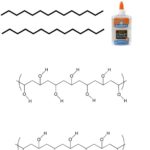
Introduction Originally, Slime was a toy product manufactured by Mattel, sold in a plastic trash can and introduced in February 1976. It consisted of a non-toxic viscous, squishy and oozy green or other color material made primarily from guar gum. Today, children everywhere have discovered how to make their own slime by using Elmer's glue. So … [Read more...]
Dust Flammability – Part 2 of 3 in a Series on Explosions

Dust Flammability In this second part in our Series on Explosions and Flammability we will discuss Dust Flammability. The dust pentagon below shows that there are five (5) elements necessary for a dust deflagration to occur. Dust Flammability Pentagon Combustible dust Oxidant Ignition source Dispersion of dust Confinement of dust Although confinement is … [Read more...]
Hydrocarbon Gas Flammability – Part 1 of 3 in a Series on Explosions

Introduction to Hydrocarbon Gas Flammability Today in Part 1 we will introduce important concepts in hydrocarbon gas flammability. For a fire or deflagration to occur, three things must be present: oxygen (above the minimum oxygen of combustion), an ignition source, and hydrocarbons (in concentrations between the Upper Flammability Limit and Lower Flammability Limit). The … [Read more...]