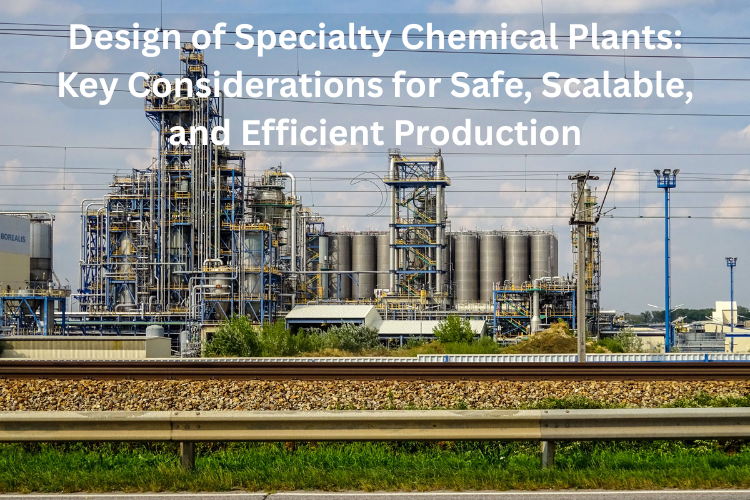
Let’s be honest, when most people hear “specialty chemical plant design,” their eyes roll over faster than a batch of improperly cooled polymer. But here’s the thing: the engineering of these facilities is nothing short of fascinating. It’s the place where chemistry and creativity, safety and scalability, and raw materials are turned into the products that drive industries all over the world.
Chemical plant design is a high-stakes task that requires precision, vision, and the right engineering partner, whether you’re designing a facility from scratch or remodeling an existing one. That’s where firms like Costello come in, having decades of experience at their fingertips for each molecule of the process.
Why Specialty Chemical Plants Are a Different Beast Altogether
Not all chemical plants are created equal. Specialty chemical plant facilities deal with more complicated formulations, have tighter product tolerances, and use a wider variety of raw materials than commodity counterparts. This means the engineering chemical plants process needs to account for diverse reaction chemistries, strict purity standards with zero room for contamination, flexible production runs to handle multiple product lines, highly specific safety protocols for hazardous or reactive materials, and regulatory compliance in environmental and occupational safety.
Basically, every design decision carries weight, and there is little room for error.
Safety First – Because There’s No Second Chance in Chemical Plant Designing
When it comes to chemical plant design, if there’s one thing that’s non-negotiable, it’s safety. We’re not talking about putting some warning labels on it and calling it a day. True safety is built into all elements of the plant, from the Process Hazard Analysis (PHA) systems during the design phase to the placement of relief valves and emergency shutdown systems.
Key safety factors include HAZID and HAZOP studies to catch design flaws early, proper segregation of incompatible chemicals, explosion-proof electrical systems in hazardous zones, reliable pressure relief and containment systems, and comprehensive emergency response planning.
Safe chemical plant design is not just about protecting people; it’s for your plant investment, your reputation, and the environment around your plant.
Scalability: Building for Today, Designed for Tomorrow
Scalability is one of the least noticed factors in engineering chemical plants. Clients often come in with a production target in mind, but markets change, demand surges, and suddenly that “perfectly sized” facility becomes a bottleneck.
Smart chemical plant design future-proofs the plant by designing systems that are modular or skid-mounted, that can be expanded with minimum impact and disruption, including flexible pipe routing for new equipment additions, have appropriate sizes for utilities (steam, cooling water, power), etc., and plant layouts that have expansion areas planned.
A well-designed plant today should be able to grow with your business, not hold it back.
Efficiency: Where Good Engineering Meets Good Business
Efficiency in specialty chemical production is about more than just throughput. It’s about optimizing every BTU, every gallon of solvent, and every labor hour in the process. When engineering chemical plants, efficiency improvements often come from heat integration to recover and reuse thermal energy, process simulation using tools like ChemCad to model and optimise the design before the plant is built, reducing waste streams through better reaction selectivity and separation design, automating repetitive process steps with modern control systems, and debottlenecking existing operations to process more output from current assets.
The best plant designs don’t just meet production targets; they go above and beyond and trim production costs. And that’s exactly the kind of outcome that Costello’s engineering team focuses on with every project.
The Role of Process Simulation in Modern Chemical Plant Designing
The era of purely hand-calculated designs that were scrawled in engineering pads has passed. Today, chemical plant designing is backed by powerful process simulation tools that allow engineers to model an entire facility virtually before a single pipe is welded.
Simulation helps engineers answer critical “what if” questions: What happens if feed composition shifts? What happens if we increase the throughput by 20%? What happens to the distillation column when the air is turned down? These insights translate into more robust, more resilient plant designs and fewer nasty surprises down the road after startup.
Choosing the Right Engineering Partner
The success of any specialty chemical plant ultimately depends on the expertise behind its design. Having the right engineering partner requires not only knowledge but also experience in the field, knowledge of regulatory requirements, and a desire to help you succeed.
Whether you’re building a new greenfield facility, expanding an existing plant, or troubleshooting persistent operational issues, getting the design right from the start saves enormous time, cost, and headache down the road. Engineering a chemical plant is a complex task that requires a partner who’s seen it firsthand, who has been in the trenches; someone who understands that real-world plants don’t always behave like textbook models, and has the expertise to make the connection.
FAQs
1. What makes specialty chemical plant design different from general chemical plant design?
Specialty chemical plants involve more complex chemistry, tighter purity standards, and highly customized safety systems compared to commodity facilities. Unlike general plants, each specialty facility is purpose-built around specific processes.
2. How long does it take to design and commission a specialty chemical plant?
A modular or skid-mounted plant can be ready in 12–18 months, while larger greenfield facilities may take 3–5 years. Investing in thorough FEED and process simulation upfront significantly cuts down delays and redesign costs later.
3. What safety analyses are required when engineering chemical plants?
The core analyses include PHA, HAZOP, HAZID, and LOPA studies, all designed to identify failure scenarios and ensure safeguards are built into the plant from day one.
4. Can an existing chemical plant be redesigned for greater efficiency without a full rebuild?
Yes, debottlenecking studies and targeted equipment upgrades can deliver major efficiency gains without a complete overhaul. It’s often the most cost-effective way to improve throughput, energy use, and overall plant performance.
5. What is process simulation and why is it important in chemical plant design?
Process simulation lets engineers build and test a virtual model of the plant before construction begins, using tools like ChemCad. It helps optimize design, stress-test operating scenarios, and catch inefficiencies early.