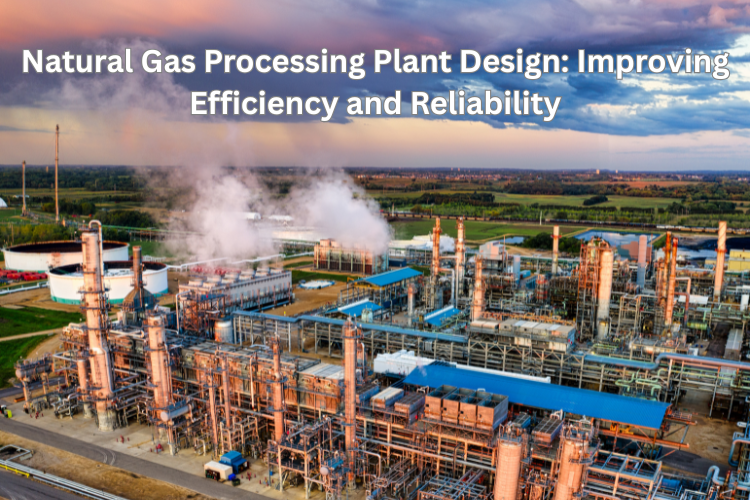
Natural gas continues to be one of the most important energy sources powering industrial, commercial, and residential needs throughout the globe. However, the raw natural gas being extracted from the ground is not ready for direct use or transport. It needs to go through a series of treatment and separation steps before it is finally ready for use. It is here that a natural gas processing plant design becomes critical. A well-engineered facility meets quality and safety standards, but it also determines the efficiency and reliability of its operation over a lifetime.
Whether the company is building a new facility or upgrading an existing one, the way a plant has been designed will directly impact throughput, energy consumption, equipment longevity, and overall profitability. Poor design choices early on in any project might cause expensive bottlenecks, unplanned downtime, and safety risks down the road. At COSTELLO, we work closely with clients to ensure that all decisions are made correctly from the very first stage to the last one in any project.
Why Natural Gas Plant Design Matters
Every natural gas field has a slightly different composition of raw gas. There are varying levels of water vapor, hydrogen sulfide, carbon dioxide, nitrogen, and natural gas liquids (NGLs). It is due to this variation that the natural gas plant design follows a no-one-size-fits-all approach. Every design facility needs to be engineered around the specific characteristics of the feed gas, the target end-use specifications, and the surrounding infrastructure.
A thoughtful design process starts with getting a detailed understanding of the composition of the feed gas and its volume, along with the process simulation to model separation, dehydration, and treating steps. Engineers also need to account for the future capacity needs, as a plant that is designed for current throughput might struggle in accommodating without significant rework.
Core Components of an Effective Design
A robust natural gas processing plant design will typically integrate several key process units, each of these should be sized and configured to work together seamlessly:
- Inlet separation to remove free liquids and solids before further processing
- Dehydration systems (glycol or molecular sieve units) to remove water vapor and prevent hydrate formation
- Acid gas removal to strip out hydrogen sulfide and carbon dioxide, protecting downstream equipment and meeting emissions requirements
- NGL recovery through refrigeration or cryogenic processing to capture valuable liquids like ethane, propane, and butane
- Compression systems to move gas through the plant and into transmission pipelines at the required pressure
- Sulfur recovery units, where applicable, to convert recovered hydrogen sulfide into elemental sulfur or other marketable byproducts
The sizing and sequencing of these units, once they have been done right, are what separate a plant that runs smoothly for decades from one that requires constant troubleshooting.
Efficiency Starts With Process Simulation
The modern natural gas plant design is heavily reliant upon the process simulation software to model how gas will behave as it moves through each unit operation. Simulation allows engineers to test multiple configurations, identify the most energy-efficient equipment arrangement, and catch potential problems before construction begins. With this upfront modeling, any risk of costly field modifications is reduced, and it also helps in the optimization of compressor loads, heat exchanger duties, and separator performance.
Energy efficiency has also become a growing priority. Heat integration between process streams, waste heat recovery, and right-sized compression equipment can significantly reduce a plant’s operating costs and its environmental footprint. Such a design that reduces energy loss at every stage will pay dividends across the complete life of the facility. COSTELLO’s engineers make use of advanced simulation tools, including ChemCad, to model these outcomes before even a single piece of equipment has been ordered.
Reliability Through Smart Layout and Redundancy
Efficiency by itself is not enough; reliability matters just as much for keeping a plant running and profitable. A reliable natural gas processing plant design will incorporate redundancy in critical systems, accessible layouts for maintenance, and proper hazardous area classification for reducing safety risks. Equipment layout should minimize unnecessary piping runs, allow safe access for inspection and repair, and account for future expansion without requiring a complete redesign.
Instrumentation and control philosophy also have a major role in reliability. Factors like automated monitoring of pressures, temperatures, and flow rates allow operators to catch deviations early, this prevents any minor issues to escalate into unplanned shutdowns.
Planning for Debottlenecking and Expansion
A lot of operators might eventually look for expanding capacity or debottleneck the existing facility instead of building a new one. A strong initial natural gas plant design anticipates this as they leave room for additional trains, oversized utility systems where practical, and modular equipment that can be added without disrupting ongoing operations. Facilities that are designed while keeping future flexibility in mind are more affordable to scale than those that have been built strictly to meet day-one requirements.
Working With Experienced Engineers
Since natural gas processing is a complex mix of chemistry, thermodynamics, mechanical systems, and regulatory compliance, it is essential to work with an experienced engineering team. From feasibility studies and process flow diagrams through detailed piping and instrumentation diagrams, equipment specifications, and commissioning support, a knowledgeable design partner will make sure that your project stays on schedule, on budget, and built to perform reliably for the future. At COSTELLO, we offer decades of chemical and process engineering experience to every natural gas project. This helps clients in building facilities that are not just efficient but also reliable and ready to grow.
If you’re planning a new natural gas processing facility or looking to improve the performance of an existing one, contact COSTELLO today to discuss how our engineering team can support your project.
FAQs
It typically includes inlet separation, dehydration, acid gas removal, NGL recovery, compression, and sulfur recovery, along with process simulation, equipment sizing, and safety system design.
Because raw gas composition, volume, and end-use requirements vary by field and application, each plant must be engineered around its specific feed gas characteristics and downstream specifications.
Simulation software models how gas behaves through each processing step, helping engineers optimize equipment sizing, energy use, and configuration before construction begins.
Redundancy in critical systems, accessible equipment layouts, proper hazardous area classification, and strong instrumentation and control systems all contribute to long-term reliability.
Yes, if the original design accounts for future growth with modular equipment, extra capacity in utilities, and layout flexibility, expansion can be achieved without a major overhaul.